
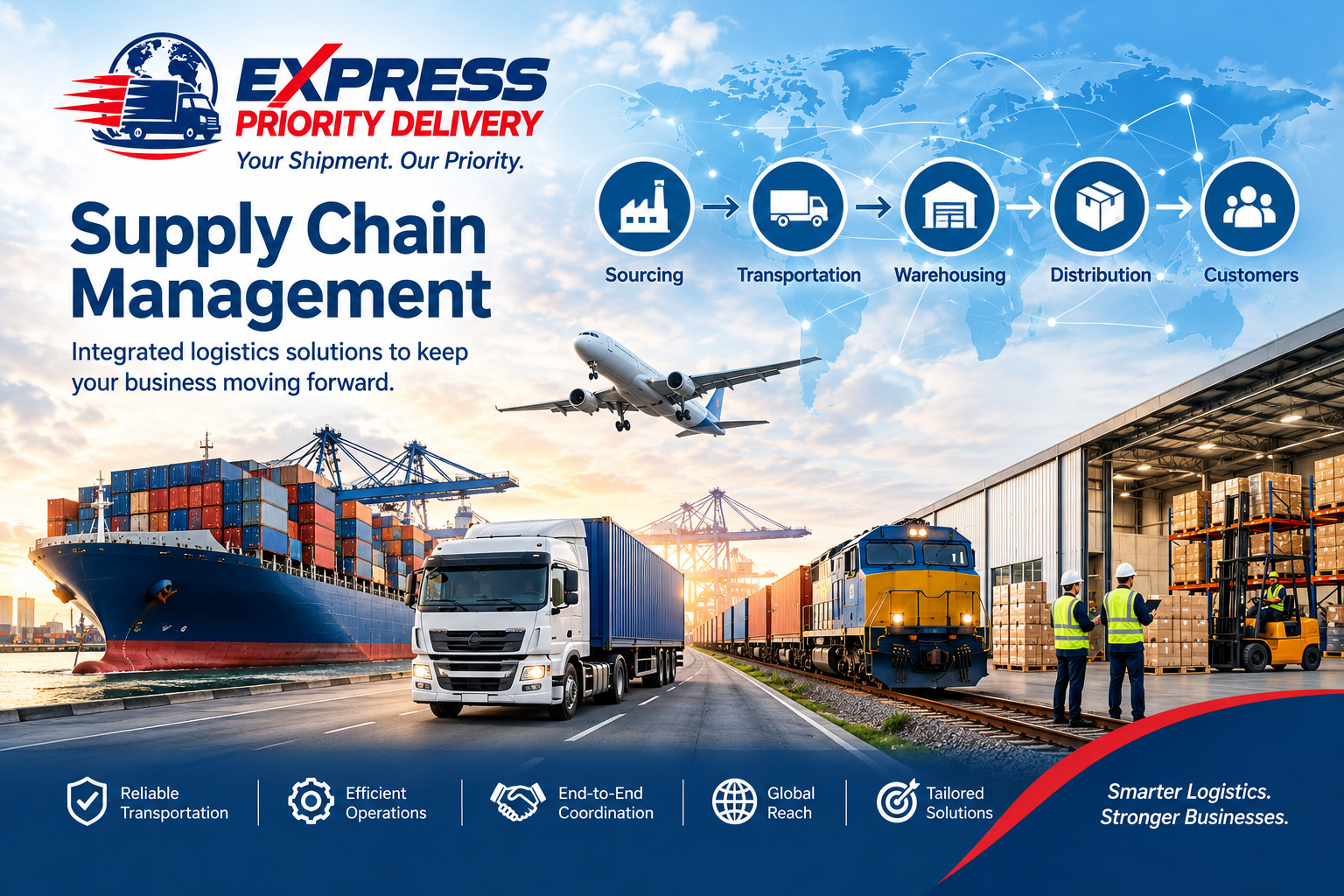
An efficient supply chain helps businesses move products from suppliers to customers through coordinated purchasing, transportation, storage, inventory management, and distribution. When these activities are planned separately, businesses may face delays, unnecessary handling, limited shipment visibility, and avoidable operating costs.
Express Priority Delivery focuses on helping businesses understand and coordinate the logistics activities involved in moving goods. Depending on the services available and the agreed scope, supply chain support may bring together freight transportation, warehousing, distribution planning, and shipment coordination to create a more organized flow of products.
Our approach starts with understanding your business requirements, delivery expectations, inventory needs, and transportation routes.
Our Supply Chain Solutions
Transportation Planning
Transportation planning involves evaluating suitable shipping methods, routes, shipment sizes, and delivery schedules. Depending on the shipment, a logistics plan may combine air, ocean, road, and rail freight to balance speed, cost, and operational requirements.
Freight Coordination
Freight coordination helps organize the movement of goods between suppliers, warehouses, ports, rail terminals, distribution centres, and final destinations. The objective is to align transportation arrangements with the shipment's requirements and expected schedule.
Inventory and Warehousing Coordination
Inventory planning considers where goods are stored, when they are required, and how stock movements relate to purchasing and customer demand. Warehousing coordination can help businesses prepare for inbound deliveries, maintain stock records, and plan outbound distribution.
Distribution Management
Distribution management focuses on moving products from storage locations to business customers, retailers, distributors, or other destinations. Effective planning considers delivery locations, shipment quantities, scheduling, and the appropriate transportation method.
Import and Export Logistics
International supply chains may involve suppliers, carriers, ports, customs authorities, warehouses, and destination transport providers. Coordination can help businesses identify required documents, understand handover points, and plan the stages involved in international cargo movements.
Shipment Visibility and Communication
Clear shipment information helps businesses make informed decisions. Depending on the systems and carriers involved, available updates may include dispatch confirmation, transit milestones, estimated arrival information, and delivery confirmation.
Logistics Process Review
Businesses may benefit from reviewing their existing transportation and storage arrangements to identify scheduling problems, repeated handling, inefficient routes, or gaps in communication. Any proposed improvements should be based on actual shipment data, operational constraints, and measurable business objectives.
Benefits of Supply Chain Coordination
Improved planning: Helps align transportation, storage, and delivery activities.
Better coordination: Supports communication between the parties involved in moving goods.
Cost awareness: Helps businesses evaluate transportation and storage expenses across the logistics process.
Inventory support: Connects stock availability with inbound and outbound shipment planning.
Greater visibility: Available tracking and shipment updates can help businesses monitor progress.
Scalability: A well-planned logistics process can be adapted as shipment volumes and distribution needs change.
Supply chain performance depends on many factors, including supplier readiness, carrier schedules, customs procedures, inventory accuracy, and the quality of operational data. No single logistics provider can guarantee that every stage will remain free of disruption.
Our Supply Chain Coordination Process
- Understand your business: Identify products, suppliers, shipment origins, destinations, delivery requirements, and inventory needs.
- Map the logistics process: Review the main transportation, storage, handling, and distribution stages.
- Identify suitable options: Evaluate available freight methods, warehouse arrangements, and delivery schedules.
- Coordinate shipment activities: Align the agreed logistics tasks and communicate important shipment requirements.
- Monitor available updates: Review shipment milestones and address issues through the appropriate service providers.
- Review performance: Where reliable data is available, assess delivery times, transportation costs, inventory movements, and recurring operational challenges.
Who Can Benefit from Supply Chain Management?
Supply chain coordination may be useful for manufacturers, importers, exporters, wholesalers, retailers, distributors, and growing businesses that need to move goods through multiple locations or transportation stages.
Businesses with complex sourcing arrangements or specialized requirements may also need dedicated supply chain consultants, customs brokers, technology providers, or other specialist partners.
Build a More Organized Logistics Process
Whether you are reviewing an existing distribution network or planning shipments for a growing business, Express Priority Delivery can help you explore appropriate logistics options within its available service capabilities.
Contact our team to discuss your supply chain requirements, current transportation challenges, storage needs, and delivery objectives.
Express Priority Delivery — Your Shipment. Our Priority.